Technical Data Sheet Repacking Silica Gel

Summary
Repackaging silica gel requires strict humidity and air exposure control to prevent premature saturation.
The goal is to minimize moisture pickup during handling and packaging.
Repackaging Silica Gel
Workspace Requirements
• Relative Humidity (RH): Maintain an environment of ≤ 30% RH. (<20% RH ideal for critical applications).
• Temperature: Keep the room temperature between 15°C and 25°C.
• Air-conditioned rooms alone are often insufficient in humid climates; a dehumidified room is better.
• High humidity will cause the gel to absorb moisture from the air before you even seal the containers.
• Ventilation: Work in a well-ventilated area and wear a dust mask to avoid inhaling silica gel dust.
Handling & Repackaging
• Work Fast: Expose the bulk silica gel to ambient air for the absolute minimum time possible.
• Divide Quickly: Scoop the gel into smaller batches and pack them immediately to minimize exposure time.
• Open the 25 kg bag only when ready to package.
• Keep the bag closed between fills.
• Avoid leaving silica gel exposed in open bins or hoppers.
• Aim to complete packaging within a few hours of opening the original bag.
• Seal final containers immediately.
Conditioning (If needed):
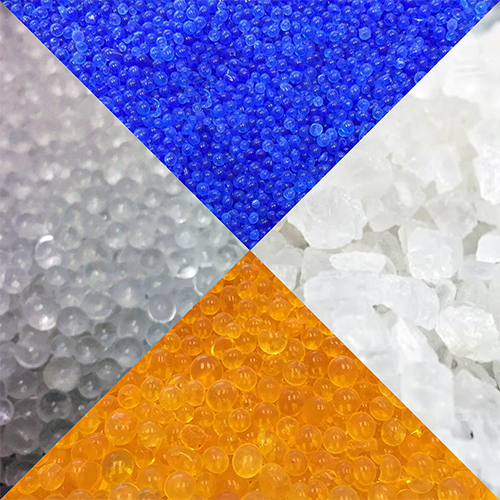
• If your silica gel has already absorbed moisture (often indicated by the gel turning pink
or green, depending on the type), you must bake it in an oven on a metal tray at 120°C – 140°C, for 2 to 3 hours to reactivate it before repackaging.
• Allow it to cool inside a desiccator or sealed, dry space before handling.
Contact Us Today
Toll Free: +1 (844) 308-3271
Email: info@hengyeinc.com
North America: +1 (832) 288-4288
Latin America: +54 (911) 6494-7470